Sunday, August 7, 2011

We lost this gamble

Keiko's mom has been visiting for the past 10 days. Se said she could get a max of 10 days off work. Keiko thought the most important thing was for somebody to be around when Baby M is born. I have 2 weeks of vacation (started last Fri) to help once we get back to the house. So we had to guess which 10 days are most likely that Baby would be born...

...
...

Unfortunately, tomorrow, Keiko's mom goes home and no baby has arrived. Since Keiko wanted her to be here for labor more than anything, we just had to guess. That's the way these things go.

Monday, August 1, 2011

The absent minded pediatrics resident

Finally, school is over. I have finally finished medical school (and grad school) and become Jefferson Jones, MD/MPH (masters in public health).

We have moved to San Diego to start residency at UCSD. We are having a great time. The weather is perfect every single day.

Pictures and movies have been updated. Since I am a resident, I have little extra time for blogs but will try.

There are some super cute videos of Taisei on Keiko's youtube page. He enjoys singing and dancing these days:
http://www.youtube.com/user/jklohana#p/u

Pictures:

Saturday, June 4, 2011

Uyuni, Salt Flats


I am going to try and update my blog to include some of the travelling I did. I lost most of my pictures so I had to wait until some of my friends posted their pictures online so that I could use them.


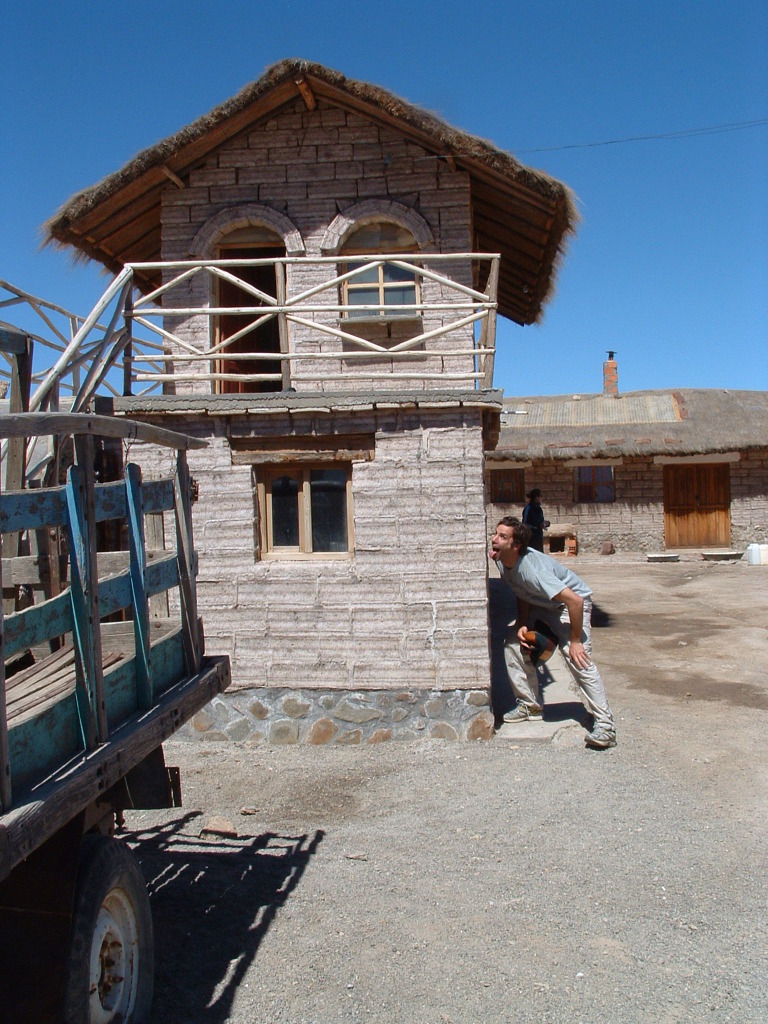
They had sections where houses, hostels, chairs, tables, and nearly everything was made of salt blocks. I am not sure how it works or what it is mixed up with so that it doesn't melt in the rain. But it looked pretty neat.


This is the largest salt flat in the world. I believe a salt flat is a salt lake that dries up in the dry season and may be a lake during times of rain. Depending on the time of year you go, it is either all lake, all dry white land, or a mix as in the time I went. It looks like you are on another planet, with nothing as far as the eye can see except mountains in the distance and either water or a white snowy looking flat land.

This is our car in the distance. You definitely need a guide. There have been people that have died when they got lost and couldn't find their way back. It's quite cold.


It's quite beautiful, but there is honestly not a ton to do so my group filled out time taking random pictures of jump shots, perspective shots, shadow pictures, etc.

Posted by Picasa

Tuesday, May 10, 2011

Sum of Bolivia trip

I am back in the US. This is more for my records. I had to write this as an evaluation of the course. It is probably boring to read, but this is my best place for recording information like this.

Depending on the rotation, I arrive at the clinic or hospital between 8 and 9 am. Until noon or 2 pm I worked with an attending physician. There were days where it was outpatient and days inpatient. On outpatient days, I would often conduct the entire physical exam and report my findings. The attending would sometimes confirm my findings and sometimes just take my word. I only took limited histories from the patients. At times I would assist with the patient records. On inpatient days, I would participate in rounds. I would play the same role as Bolivian medical students. I would usually just participate in discussions and answer questions that the attending asked. I would receive topics to research and present the following day. Only rarely did I receive patients to do history and physicals on who were inpatients.

All physicians ended their day from about 12-2pm and went home for lunch. I would always do the same. I then had 2 hours of Spanish class in the evenings, which would sometimes focus purely on medical spanish, practicing doing histories in Spanish, etc.

The main hospital, Hospital del Nino, was about a 30 minute walk away from my homestay. There were optional other clinics and hospitals which were further. I spent one week at an adolescent clinic service which was a 1 hour combined walking and public transportation commute.

The dress code was very casual. I usually wore khakis and a short-sleeved collared shirt with my white coat as did most other foreign medical students. Bolivian medical students were casual with jeans and sweatshirts with white coats. Attendings were more formal with shirt and ties, slacks.

The attendings were quite attentive. They were always quite busy but all of mine would take the time to answer questions whenever I had them and were very kind. Most would try to find teaching points, give out handouts, and were overall excellent teachers.

The biggest challenge for me was the language. This was the reason I went but my participation was limited by my lack of language ability. My language skills did improve over the month, but I never was able to the point that I could understand all of what was said by the patients or inpatient medical teams.

My first 2 weeks I worked with Dr. Velasco in the depat of pediatriac infectious disease at Hospital del Nino. It was a combination of inpatient and outpatient. The majority of patients were pneumonias, RSV, and other diseases simlar to the US. I did see some disease less common in the US including leishmania, pulmonary and mengineal TB, and ITP.

The 3rd week I worked at the adolescent services clinic. It was mainly a prenatal care for poor, single females aged 16-25. It was primary care on the ground. She spent a lot of time working on prevention of future pregnancies, STD, etc.

The last week I returned to Hospital del Nino working in the pulmonology unit. The attending was a leader in South America for taking care of kids with down syndrome. On our outpatient days, we mainly did normal well child and sick visits for kids with down syndrome rather than a pulmonology clinic. The inpatients were nearly all various types of pneumonias.

I believe this experience will help me in 2 main areas. The first is with my Spanish. I think it has made a huge difference in getting me to a level that I will begin to be able to improve my Spanish by talking and working with patients during my residence and afterwards rather than just no understanding anything and making no improvement. Knowing Spanish may be quite important in my future career goals, as I wish to work with the underserved. My residence is in San Diego, where Spanish is very important and in the future, Spanish will continue to be important to work with underserved Spanish-speaking populations in the US.

The other main area was being able to experience a health care system with limited resources. I can have numerous examples where the care differed than that in the US because of constraints on resources. Some of them were unfortunate, such as the lack of care for most kids with cancer due to the lack of insurance for cancers. Others were good examples of using less expensive but effective drugs, diagnostic techniques, and other choices that would be good examples to physicians in the US.
Friday, April 22, 2011

Adolescent Services

My 3rd week was spent at the adolescent services. It is a primary care clinic for 15 to 25 year olds. It ended up being a good review of obstretrics. 90% of the patients we saw were pregnant. It was really great primary care in the trenches. The Spanish was better for me than at the hospital because it was less technical and will likely be more useful in the future. By the 3rd day, I was largely doing the physical exam, vitals, doppler, etc. while the doctor wrote the notes and interviewed the patient. I didnt see any crazy diseases not in the US but quite enjoyed my time seeing a clinic in Spanish.

There were a few differences I saw from the US. They were much more quick to diagnose a disease and give medicine. Nearly all pregnant women with vomiting were diagnosed with hyperemesis gravidarum, a disease of vomiting too much during pregnancy. I rarely saw it diagnosed in the US and have not heard of much medication being given for pregnancy related nausea, but at this clinic anti-nausea medication was given to most people with nausea. Similarly, nearly every pregnant women with a headache (none of whom had any symptoms of a runny nose or cough) were diagnosed with sinusitus and given antibiotics. Vaginal discharge was given a slew of medications to cover yeast, bacteria, and STDs because they didnt have a microscope to diagnose if there were any disease at all.

I cant judge, especially since they have much lower rates of antibiotic resistance.

Next week I will do pulmonology.

Thursday, April 21, 2011

Weekend of soccer and Tiwanaku

Facebook pictures are up. I was able to fill this last weekend up with some cultural events, both old and new.

I took a trip to the old capital of the Andean region called Tiwanaku. It is thought to be the most powerful city from roughly 1000 BC to 1000 AD. It was a economic and religious center. It is thought that human sacrifices of the gruesome type were performed. A lot of the buildings and statues were destroyed by the Spanish to "modernize" their cultures. They used the stones of the temples to build churches and beheaded statues, etc. Academics still dont understand how they built a lot of the large temples with the techonolgies at the time.

I personally had a great time as I really haven´t had much experience with ruins this old.


The next day, I went to a soccer game. There are 2 teams in Bolivia, Bolivar and The Strongest. They were playing each other making for a big rivalry so some of us students decided to go. We got about the best seats in the place for 10 dollars. I bought a jersey for 5 dollars and of course routed for that team, Bolivar. Bolivar did win so it was a good day. The ends of the stadium held the hard core cheerers that were constantly singing, jumping up and down in unison in support of their teams. While certain areas of Souther America are a little famous for violence at soccer games, Bolivia seems to be pretty tame. I was surrounded by families with little kids. It was an excellend venue.

Next trip on the schedule: Uyuni salt flats.

Wednesday, April 13, 2011

Weekend in the city

I didnt take any trips last weekend, so I stayed in La Paz. I like having time at my homestay so I have time to chat in Spanish with my host family. They are extremely nice and have the patience to work with my Spanish. My host dad has a house out a ways from the city that he is building, all by himself. It is very impressive. He is making the cement pillars for support, buying and shaping the iron girders, planning the whole thing out. He was a civil engineer when he was working. So we took the form of public transportation out their and gave it a look. Hen then showed me around the touristy parts of the city that have all the markets for souvenirs, the giant old church (St. Francisco Cathedral), while we were looking for some parts for his house. He really likes oldies so we watched some dvds that he has of some of his favorite artists: Paul Anka, Enrique somebody that apparently was the Mexican equivalent of Paul Anka, and The Platters. I know my dad would have had a good time joining us that evening. A quick note about public transportation. Traffic is so bad here that I cant imagine owning a car here. The roads are constantly congested and as I mentioned in my last post, the traffic laws seem flexible. Similar to many countries, most of the public transportation is conducted by vans that fit a lot more than they look like they would. They are only about 25 US cents to take. There are a few busses that are even cheaper. The vans look like they will stop in the middle of the road any time someone wants to get on or off. There really is only 2 things that I am not a huge fan of in Bolivia that I have experienced so far. Littering, and honking. I have personally witnessed littering a number of times, people just throwing packages on thr ground or out of their car. I heard it is just common here from people who live here. Its not something I can understand. Honking here is soooo common. Everytime traffic causes a car or 20 to stop, every car just honks until it goes, which is pretty much all the time. Honking has lost all meaning in this city as it is just one honk after the other, as far as I can tell. But dont get me wrong, I like many and most things about this city and country. On Sunday, I went to the local Latter-Day Saint church. Someone here told me that Mormonism is the second most common religion here, next to Catholicism. I would believe it, as I saw some LDS churches in some very rural places on my trip over 1 week ago. The church I went to was huge. I arrived 30 minutes early, but ended up being later, because I found out I was waiting in the wrong chapel. They have 2 entire chapels and churches in 1 building to accomodate more people. I could only understand bits and pieces, but I had a good time. There are always lots of nice people at church. One of the biggest differences was timing. I had heard that punctuality isnt stressed in much of Latin America. People slowly streamed in at the beginning of church and I dont know if it is normal, but we ended a good 30 minutes late. That being said, I look forward to going next week if possible.